
Bus vs. Coach Bus: Which One Fits Your Travel Needs?
January 26, 2026
Choosing between a coach and a bus can feel confusing when both seem to offer similar transportation. The truth is, these vehicles serve different purposes with distinct features that make each one the better choice for specific travel scenarios.
Whether you’re planning corporate events, school field trips, or long-distance travel, understanding these differences helps you select the right option. Chicago coach buses from Chicago Motor Coach provide the comfort and reliability your group needs for any journey.
The Basics of Bus and Coach Travel
Before exploring specific differences, it’s helpful to establish what each vehicle actually is. While both transport passengers, their design, purpose, and capabilities vary significantly. Here’s what defines each type of transportation.
What Is a Bus?
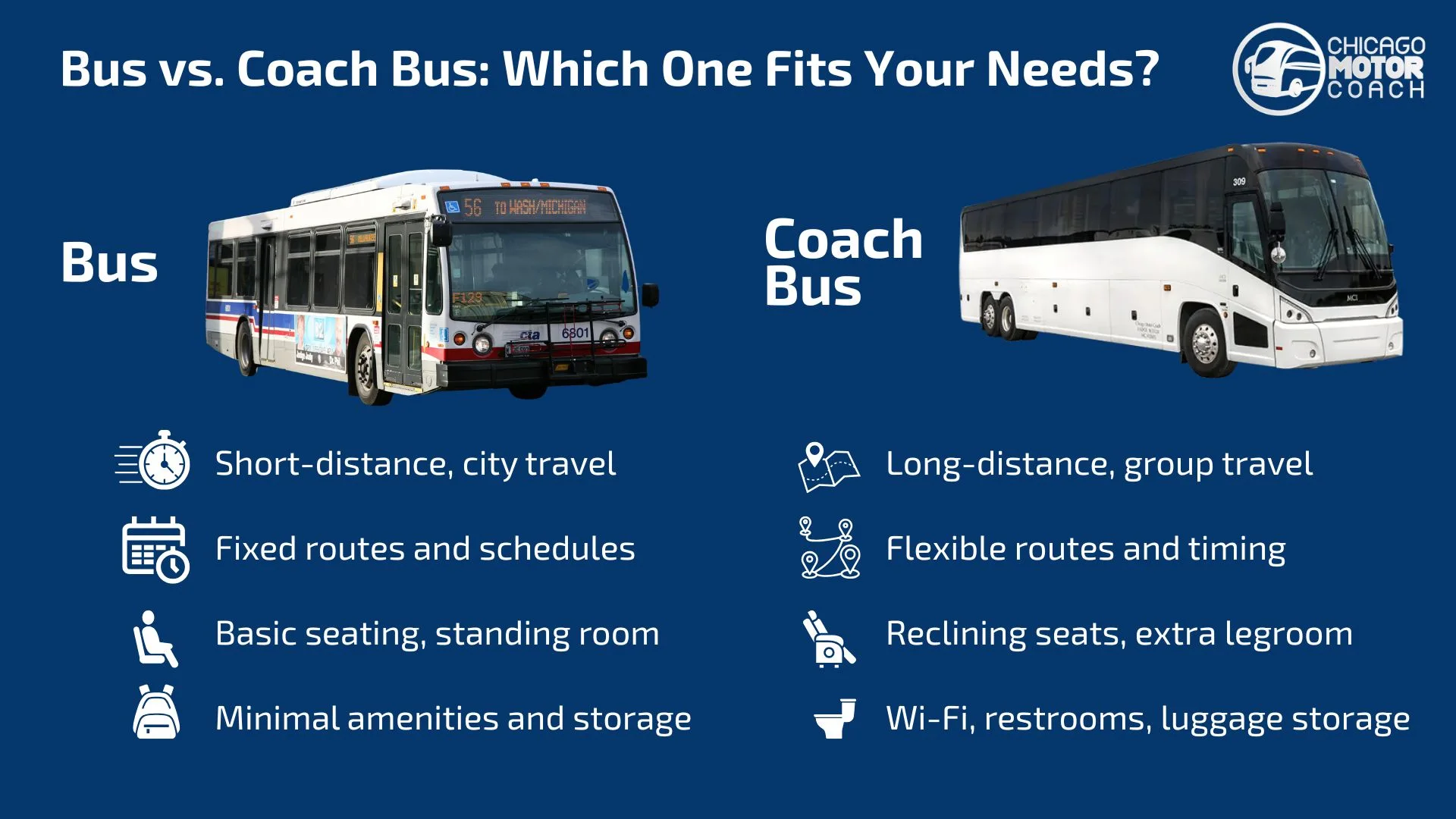
A bus is designed primarily for public transportation along fixed routes with frequent stops. Transit buses operate within cities, picking up standing passengers at designated locations throughout the day. These vehicles feature bench-style seating, wheelchair lifts, and standing areas to maximize capacity for short-distance travel.
What Is a Coach?
A coach bus focuses on comfort for longer journeys between cities or states. Modern coach buses include reclining seats, onboard restrooms, luggage storage beneath a raised floor, and climate control. Charter buses operate on flexible schedules for private group transportation rather than predetermined routes.
Key Differences Between Coaches and Buses
The bus vs. coach debate centers on several core distinctions. Understanding these differences helps you make informed transportation decisions for your group. Below is a quick comparison, followed by detailed explanations of each factor.
Purpose and Usage
Transit buses serve everyday commuters traveling short trips within metropolitan areas. The first bus line opened to provide cost-effective transportation for people needing frequent, reliable access to work and essential services. These vehicles run on regular schedules with high-frequency service.
Coach buses excel at long-distance trips for large groups attending special occasions, corporate events, or religious gatherings. Unlike standard buses, luxury coach buses don’t follow fixed routes. Instead, they travel point-to-point based on your group’s specific itinerary, making fewer stops for a more comfortable journey.
Seating and Comfort
Standard buses prioritize passenger capacity over individual comfort. Seats are firm, upright, and spaced closely together. Many transit buses include standing areas since not all buses offer enough seats during peak hours. This design works well for passengers traveling only a few miles.
Luxury coaches transform travel into a pleasant experience with plush, reclining seats that rival airline business class. Each passenger gets their own comfortable seat with extra legroom. The raised floor creates space underneath for luggage storage, eliminating overhead crowding. You’ll find options for various group sizes depending on your needs.
Amenities and Features
Transit buses keep amenities basic because riders typically spend less than an hour onboard. You’ll find wheelchair lifts, air conditioning, and occasionally USB charging ports. The body style emphasizes durability and easy passenger flow rather than premium features.
Motor coaches include amenities that make hours of travel enjoyable:
- Power outlets and Wi-Fi for staying connected
- Entertainment systems with audio systems and video screens
- Onboard restrooms for convenience
- Climate control for year-round comfort
- Overhead storage plus undercarriage compartments
These other amenities especially matter when you’re spending several hours on the road for long-distance trips or multi-day adventures.
Routes and Flexibility
City or transit buses operate along predetermined routes that rarely change. Passengers board at specific stops according to published schedules. This system works efficiently for urban areas where many people travel similar paths daily. However, you can’t request route changes or custom pickup locations.
Charter buses provide complete flexibility for your travel plans. You choose pickup locations, departure times, and destinations. Planning a field trip? Your driver collects students directly from school. Organizing convention transportation? We’ll shuttle attendees between hotels and venues on your schedule.
Cost Structure
Public transportation charges low, fixed fares per passenger per trip. This cost-effective transportation helps individuals travel affordably around cities. However, total costs add up quickly when moving large groups, especially if multiple transfers are needed.
Coach rentals charge based on factors like duration, distance, and vehicle size. While the upfront cost appears higher than individual bus tickets, splitting the rate among passengers often proves more economical. You also gain the benefits of traveling together as a cohesive group.

Safety and Regulations
Both vehicles follow strict Department of Transportation standards, but coaches often exceed minimum requirements. Newer models include advanced safety features like:
- Electronic stability control
- Anti-lock braking systems
- Seat belts for every passenger
- GPS tracking and monitoring
Professional charter bus drivers undergo specialized training beyond what’s required for transit operators. They’re experienced in long hauls, highway driving, and managing group travel logistics. This expertise matters most during overnight trips when passenger safety depends on driver alertness and skill.
Travel Distance
Transit buses handle short trips efficiently, typically traveling routes under 20 miles. These two vehicles — standard buses and school buses — focus on moving people short distances repeatedly throughout the day. Standing passengers can board easily during quick stops.
Coaches excel on longer routes spanning hundreds of miles. The comfortable seats, onboard restrooms, and entertainment systems make extended travel bearable. Groups often choose coaches for trips to Wisconsin, neighboring states, or cross-country adventures. Understanding what to expect on long bus trips helps passengers prepare appropriately.

Passenger Experience
The difference between a bus and a coach becomes most obvious in overall passenger comfort. Transit buses get you from point A to point B efficiently, but the experience focuses purely on transportation. You’ll stand during crowded periods, hold onto handles during acceleration, and exit quickly at your stop.
Coaches prioritize passenger comfort throughout the journey. Entertainment systems keep travelers engaged during multi-hour trips. Climate control maintains comfortable temperatures regardless of weather. The spacious interior allows passengers to move around, stretch, or use onboard restrooms without waiting for scheduled stops. For groups with children or elderly passengers, this comfort makes all the difference.
Choosing the Right Vehicle for Your Needs
Your transportation choice depends on several factors related to your specific situation. Consider these scenarios when deciding between a bus or coach for your next trip.
Choose a transit bus when:
- You’re traveling alone or with just one or two people
- Your destination is within city limits along existing routes
- You need affordable, per-person transportation
- You don’t have luggage or special equipment
- Flexible schedules aren’t required
Choose a coach bus when:
- You’re traveling with a group of 10 or more people
- Your journey exceeds 50 miles or crosses state lines
- You require flexible pickup times and custom routes
- Passenger comfort matters for your event’s success
- You need secure luggage storage for extended trips
- Your itinerary includes multiple destinations or stops
Most groups planning school field trips, corporate outings, or special occasions find coaches deliver better value through improved comfort, flexibility, and group cohesion. The difference between coaches and buses justifies the investment when you consider the overall experience and convenience.
Make Every Journey Comfortable
The coach vs. bus decision comes down to purpose, comfort, and flexibility. While buses serve short-distance travel along fixed routes, luxury coaches provide private transportation with premium amenities for longer journeys. Modern coach buses transform travel from a necessity into an enjoyable part of your event.
Chicago Motor Coach has served the Chicagoland area for over 35 years, providing reliable transportation services for more than 50,000 satisfied customers. Our diverse fleet accommodates groups of any size, all maintained to the highest standards. Chicago charter bus rentals from our team ensure your group travels safely and comfortably, whether you’re heading downtown or across state lines. Contact us today to discuss your next trip.
Similar Posts
 February 2, 2026 Group Travel
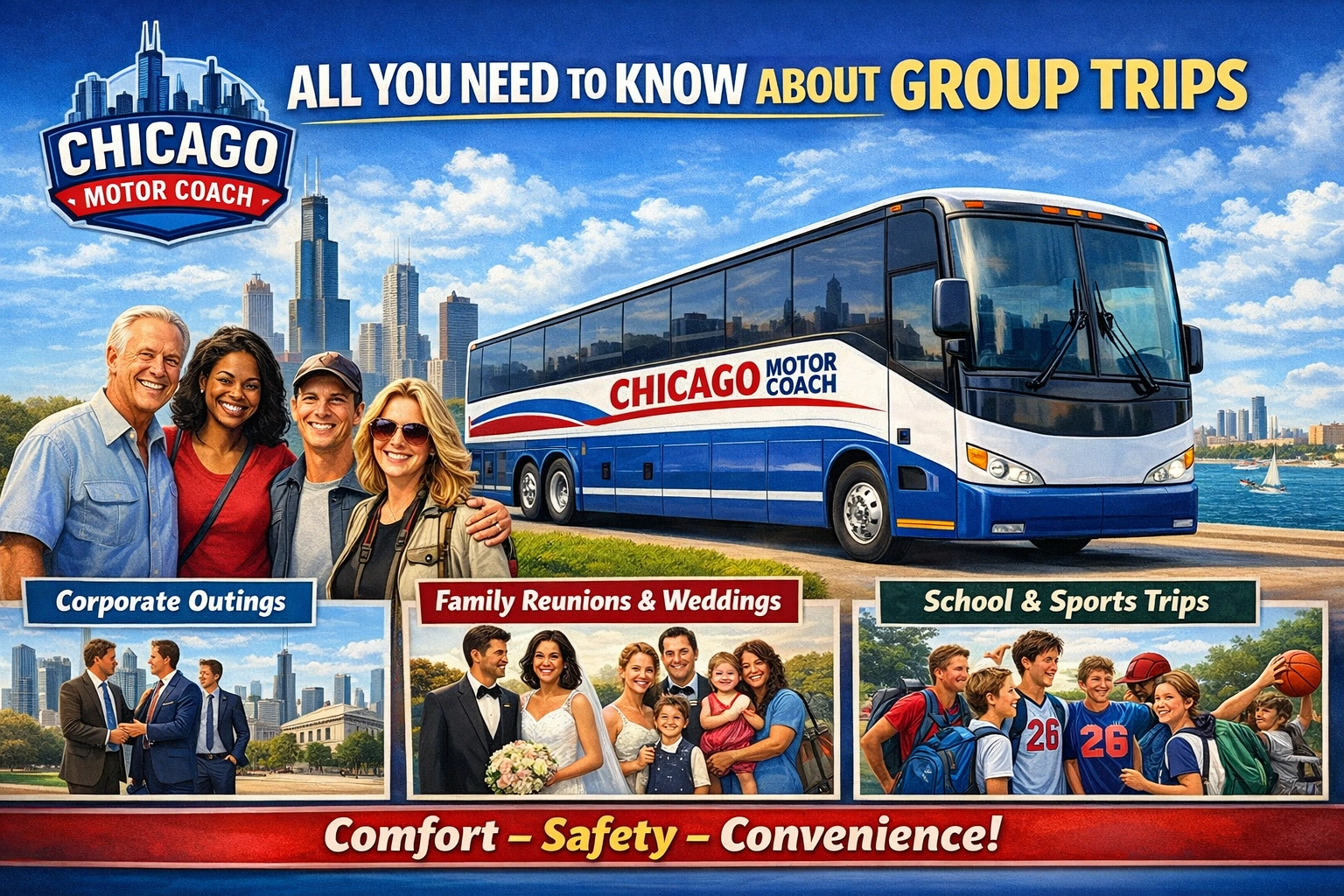
All You Need to Know About Group Trips
Explore fun team-building events in Chicago and the suburbs! Read this guide and learn why you need professional charter bus transportation.
Read more February 2, 2026 Group Travel
Illinois Christmas Towns: 12 Magical Holiday Destinations for Your Group
Illinois transforms into a winter wonderland each December, with towns across the state competing to create the most memorable holiday…
Read more November 24, 2025 Group TravelHow to Transport a Large Group Comfortably: The Benefits of Coach Hire
How to Transport a Large Group Comfortably: The Benefits of Coach Hire
Read more